Leave Your Message
-
Phone
-
E-mail
-
Whatsapp
-
Wechat

Why Choose Low Voltage Products for Global Sourcing?
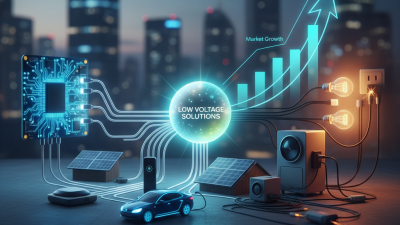
Global electrification is changing how companies specify and source electrical equipment. The International Energy Agency’s Electricity 2024 report forecasts global electricity demand will grow by about 3.3% annually through 2026. Renewables are expected to supply most of this increase. That growth creates practical demand for dependable Low Voltage switchgear, distribution boards, circuit protection, and control components.
Fatih Birol, Executive Director of the IEA, described this transition clearly: “The Age of Electricity is upon us.” His statement is not only about power generation. It also highlights the equipment connecting electricity to factories, offices, homes, and data centers. When products follow recognized IEC standards, buyers can compare safety performance, testing methods, and documentation across suppliers. This makes international sourcing more manageable.
Low Voltage products can reduce installation complexity, energy losses, and maintenance delays. A compact protection device, for example, may prevent a production line from stopping after a short circuit. Standardized terminals and clear labels also help technicians work faster. These details matter inside a dusty workshop or a crowded control cabinet.
The case is strong, but not flawless. The lowest purchase price can hide weak testing, inconsistent materials, or limited after-sales support. Global buyers should verify certifications, factory quality systems, warranty terms, and regional compatibility. IEC 60364 and related IEC product standards provide useful reference points, but they do not replace local engineering review. A sensible sourcing decision balances cost, safety, availability, and long-term reliability. That balance is where Low Voltage products become a strategic choice, not merely a cheaper component.
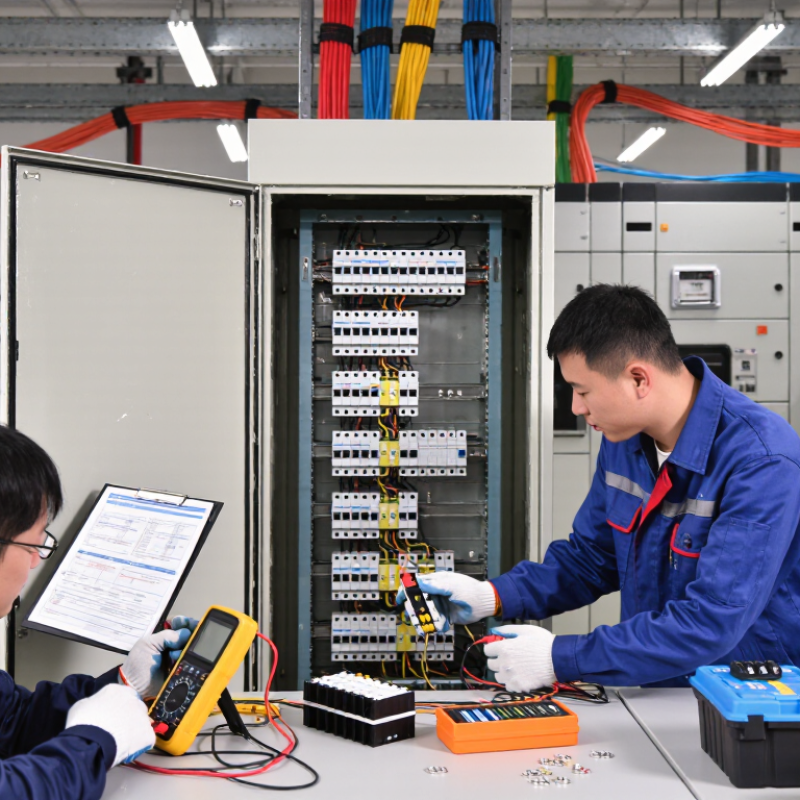
Low voltage products generally operate below 1,000 volts AC or 1,500 volts DC, according to IEC safety classifications. They include circuit breakers, fuses, switches, contactors, control panels, and distribution boards. These devices manage electricity close to where people work and live. Small details matter. A breaker protects a branch circuit, while a contactor controls motors or heating equipment.
Their applications are broad. Homes use them for lighting, sockets, and household appliances. Commercial buildings depend on them for elevators, air-conditioning, fire systems, and emergency power. Factories use low voltage controls around conveyors, pumps, and automated machinery. Data centers require coordinated protection for dense electrical loads. Solar inverters, battery systems, and electric vehicle chargers also need suitable low voltage switching and protection.
The International Energy Agency’s Electricity 2024 report expects global electricity demand to grow by an average 3.4% annually from 2024 to 2026. That growth increases demand for dependable distribution equipment across new and renovated facilities. Global sourcing can improve access to tested components and alternative production capacity. Yet voltage alone is not enough. Buyers must verify short-circuit ratings, insulation performance, temperature limits, certifications, and local installation rules. A product may meet an international standard but still require regional approval. This is an area where procurement teams sometimes move too quickly. Reliable sourcing needs technical review, traceable documents, sample testing, and realistic evaluation of supplier consistency.
| Data Dimension | Fact or Specification | Typical Products or Applications | Global Sourcing Relevance |
|---|---|---|---|
| Definition | In common international electrical practice, low voltage generally refers to circuits up to 1,000 V AC or 1,500 V DC. | Distribution boards, circuit breakers, contactors, control panels, sensors, power supplies, and wiring accessories. | A clearly defined voltage range helps buyers compare products and identify applicable safety and installation requirements. |
| Extra-low-voltage distinction | Extra-low-voltage systems operate at substantially lower levels; common safety classifications include SELV and PELV, subject to the applicable standard and installation conditions. | Security systems, access control, building sensors, LED control circuits, data equipment, and automation devices. | Lower operating voltages can simplify integration and reduce electrical risk, but voltage, isolation, current, and enclosure requirements must still be checked. |
| Main product categories | Products include switching and protection equipment, control equipment, power-conversion equipment, wiring devices, and monitoring components. | MCBs, MCCBs, RCDs, fuses, relays, terminal blocks, transformers, DC power supplies, meters, and programmable control components. | A broad supplier base allows buyers to source complete assemblies or individual components according to technical and commercial needs. |
| Residential use | Low-voltage equipment manages power distribution, overload protection, switching, lighting, and household control functions. | Consumer units, miniature circuit breakers, residual-current devices, dimmers, timers, door-entry systems, and smart-home controllers. | Standardized modular products support efficient installation, replacement, and maintenance across many housing projects. |
| Commercial buildings | Commercial systems require coordinated protection, distribution, lighting control, monitoring, and building automation. | Panelboards, surge protective devices, contactors, occupancy sensors, emergency lighting controls, and building-management interfaces. | Global sourcing can provide scalable solutions for offices, retail premises, hotels, schools, and healthcare facilities. |
| Industrial automation | Industrial low-voltage systems control motors, machinery, instrumentation, process signals, and production-line safety functions. | Motor starters, variable-frequency drives, PLC panels, industrial Ethernet devices, safety relays, sensors, and control cabinets. | Sourcing flexibility supports customized specifications, replacement parts, system expansion, and production-volume requirements. |
| Energy and infrastructure | Low-voltage equipment is used downstream of transformers and within auxiliary, control, protection, and monitoring circuits. | Solar inverters, battery-system controls, EV charging equipment, street-lighting controls, sub-distribution boards, and monitoring meters. | International suppliers may offer products suited to different grid conditions, enclosure ratings, current ratings, and project scales. |
| Key technical ratings | Important parameters include rated voltage, rated current, frequency, short-circuit rating, insulation voltage, IP rating, temperature range, and service life. | Protection devices, enclosures, connectors, power supplies, control gear, and assembled switchboards. | A standardized technical comparison reduces specification errors and helps buyers evaluate equivalent products from multiple regions. |
| Safety and conformity | Products should be assessed against the laws, electrical codes, installation rules, and relevant product standards of the destination market. | Circuit protection, control panels, power supplies, cables, connectors, and complete low-voltage assemblies. | Compliance documents, test reports, declarations, traceability records, and clear labeling are essential before import and installation. |
| Energy efficiency | Efficiency depends on conversion losses, standby consumption, conductor sizing, switching performance, thermal management, and load matching. | Switch-mode power supplies, motor controls, lighting controls, metering devices, and energy-management equipment. | Comparing efficiency data and lifecycle costs can be more valuable than comparing purchase price alone. |
| Customization potential | Common customization areas include enclosure dimensions, terminal layouts, current ratings, communication interfaces, labels, and control logic. | Control cabinets, distribution assemblies, automation panels, monitoring systems, and project-specific wiring solutions. | Supplier comparison should include engineering capability, sample approval, minimum order quantity, lead time, and change-control processes. |
| Why choose global sourcing? | Global sourcing can expand supplier options, production capacity, technical alternatives, and procurement flexibility. | Suitable for project procurement, original equipment manufacturing, maintenance inventories, system integrators, and electrical distributors. | The best result comes from balancing total landed cost, compliance, quality assurance, logistics, warranty support, and long-term supply continuity. |
Note: Voltage classifications and conformity requirements may differ by jurisdiction and product category. Always verify the applicable local regulations and product standards before purchase, import, or installation.